Beurer BM 96 Cardio Blood Pressure Monitor with ECG Function — Comprehensive Heart & Rhythm Monitoring
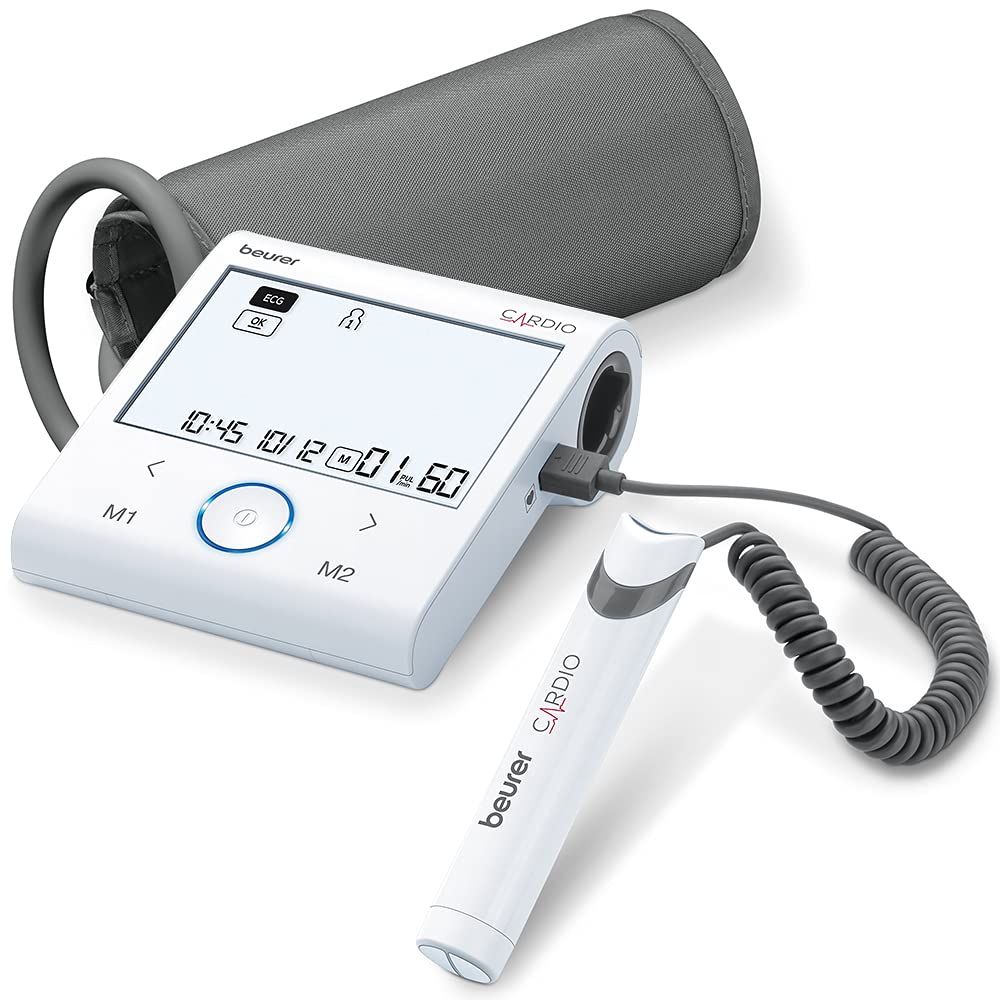
Beurer BM 96 Cardio Blood Pressure Monitor with ECG Function — A Combined Heart Health Monitor
The Beurer BM 96 Cardio Blood Pressure Monitor with ECG Function is an upper-arm blood pressure monitor that goes beyond simple BP and pulse measurement by incorporating a 1-channel ECG and advanced arrhythmia detection to help screen for atrial fibrillation (AFib) — an important risk factor for stroke prevention.
Designed for clinicians and motivated patients alike, this medical device combines cardiovascular monitoring in one easy-to-use unit and can connect to a smartphone app for tracking trends over time.
What It Is & Clinical Purpose
Most blood pressure monitors measure only systolic/diastolic pressure and heart rate. The BM 96 adds rhythm monitoring via an ECG stick that records your heart’s electrical activity, allowing identification of arrhythmias, particularly atrial fibrillation, which is linked to increased stroke risk.
Combining these capabilities into one upper-arm unit helps clinicians and patients track both pressure and rhythm in a single session — a practical tool for hypertension management with rhythm insights.
Key Features & Their Clinical Relevance
Fully Automatic Blood Pressure & Pulse Measurement
The BM 96 automatically measures blood pressure and pulse on the upper arm using an oscillometric technique. Its XL display and colour-coded classification help interpret results at a glance.
Clinical benefit: Standardized, repeatable BP readings reduce variability in follow-ups.
1-Channel ECG — Heart Rhythm Capture
An integrated ECG stick allows clinicians or patients to record a single-lead ECG rhythm strip, which captures heart rhythm for brief periods — typically 30–120 seconds.
Clinical benefit: Rhythm strips can reveal irregularities not apparent in pressure readings alone.
Advanced Arrhythmia (AFib) Detection
BM 96 includes arrhythmia detection algorithms capable of flagging possible atrial fibrillation, helping identify rhythm disturbances associated with increased stroke risk.
Clinical benefit: Early identification of AFib facilitates timely clinical evaluation and risk reduction strategies.
Resting & Risk Indicators
The device features a resting indicator to ensure measurements are taken under appropriate conditions, and a risk indicator that classifies results to support clinical interpretation.
Clinical benefit: Helps ensure measurement quality and aids in classifying cardiovascular risk.
Large, Easy-to-Read Display & Intuitive Operation
With an XL illuminated display and touch-sensor buttons, the BM 96 is easy to operate for clinicians, patients, or caregivers.
Connectivity & Data Management
Via Bluetooth® 4.0 and the free beurer HealthManager Pro app, measurements can be logged, reviewed, and shared digitally.
Clinical benefit: Enables longitudinal monitoring and easier data sharing with care teams.
Two-User Memories
The monitor can store readings for two users, with up to 60 measurements each, making it suitable for shared clinical environments.
How It Works — Simple & Integrated Monitoring
-
Blood Pressure & Pulse:
Sit comfortably, position cuff at heart level, and initiate measurement.
The device automatically inflates and deflates for seamless data capture. -
ECG Rhythm Recording:
Attach and use the ECG stick to capture heart rhythm. Three input methods help ensure flexibility and ease of use. -
Result Interpretation:
BP, pulse, and ECG rhythm are displayed clearly, and data is saved to memory or the app for trend analysis.
Practical Pros & Cons (Clinician-Focused)
Pros
- Combined cardiovascular monitoring — BP + heart rhythm in one device.
- AFib detection supports stroke risk screening.
- Large, intuitive display enhances usability.
- Bluetooth connectivity with app for longitudinal tracking.
- Two user memories for shared use.
Cons / Limitations
- Single-lead ECG is not a diagnostic 12-lead system — it’s a screening tool.
- No peer-reviewed clinical validation data for BP accuracy published publicly.
- App performance may vary with OS versions — test compatibility before use.
Typical Clinical Use Cases
- Hypertension & Rhythm Screening: Quick assessment in OPD or home settings.
- Routine Follow-Ups: Helps monitor trends over weeks/months.
- Patient Self-Monitoring: Patients can capture rhythm and BP between visits.
- Stroke Risk Awareness: AFib flag can prompt clinical follow-up or referral.
Buying Checklist (What to Confirm)
- Cuff Size: Fits upper arm circumferences of 22–42 cm.
- Certification: Medical device classification and safety marking (confirm local requirements).
- App Support: Android and iOS compatibility with Beurer HealthManager Pro.
- Memory Storage: Two users × 60 readings each.
- Warranty & Service: Check seller warranty duration and support terms.
Where to Buy
Check Beurer BM 96 Cardio Blood Pressure Monitor with ECG Function price on Amazon
Final Clinical Note
Regular blood pressure monitoring — combined with rhythm screening — offers a more holistic view of cardiovascular health. The BM 96’s AFib detection adds a layer of screening that can guide timely clinical evaluation and risk management.
Affiliate Disclosure:
As an Amazon Associate, we earn from qualifying purchases. This supports our work in providing medical-technology comparisons. Product images used in this article are sourced from Amazon product listings for illustrative purposes.
Medical Disclaimer:
This article is for informational purposes only and does not replace professional medical advice. Always consult a qualified healthcare provider before interpreting home health device results or making clinical decisions.