Diamond BPMR120 Deluxe Mercurial Arm Blood Pressure Monitor — Accurate Conventional BP Measurement, Grey
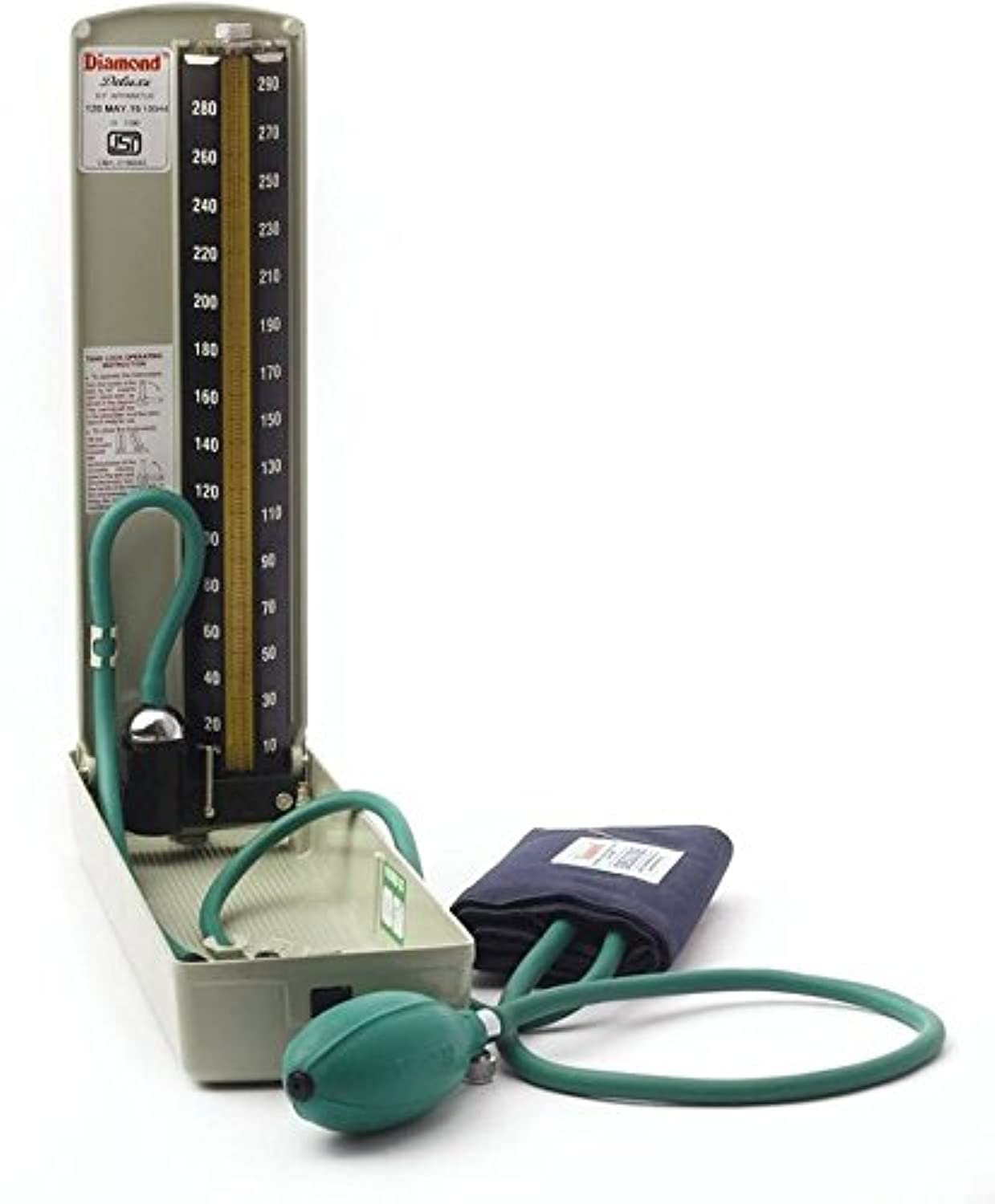
Diamond BPMR120 Deluxe Mercurial Arm Blood Pressure Monitor — Trusted Accuracy in BP Assessment
Short summary:
The Diamond BPMR120 Deluxe Mercurial BP Monitor is a conventional mercurial arm blood pressure monitor designed for precise manual blood pressure measurement in clinical, outpatient, and general practice settings. Its robust mercury column and simple mechanical operation make it a reliable standard for practitioners who prefer manual sphygmomanometry for diagnostic and monitoring use.
Why Mercurial BP Monitors Still Matter
Despite the widespread adoption of digital oscillometric devices, mercurial sphygmomanometry remains a reference standard due to:
- Direct auscultatory measurement using Korotkoff sounds
- Minimal electronic interference or calibration drift
- Consistent mechanical fidelity over long durations
- Clarity in systolic/diastolic onset point visualization
For clinicians, particularly in education, calibration benchmarking, or environments where manual skill and accuracy are paramount, a mercurial monitor like the BPMR120 remains a valuable tool.
Key Features & Clinical Utility
Reliable Mercury Column
The heart of this device is its vertical mercury column indicator:
- Clear graduations for exact systolic and diastolic readings
- Minimal parallax error when viewed at eye level
- Stable mechanical action with well-defined movement
This allows clinicians to correlate Korotkoff sounds with precise pressure levels — a gold-standard measurement approach.
Durable Arm Cuff & Bladder
The supplied arm cuff and inflatable bladder are constructed for frequent use:
- Comfortable fit for standard adult upper arms
- Even inflation and deflation patterns
- Compatibility with stethoscope auscultation
Proper cuff sizing and technique remain essential for accurate measurements.
Manual Inflation & Control
The device uses a manual inflation bulb and release valve, giving the clinician control over:
- Inflation speed
- Pressure release rate
- Gentle approach for patient comfort
This control helps reduce measurement artifacts and improves reproducibility when performed correctly.
Large, Legible Scale
The mercury column is designed with high-contrast markings and a stable viewing window. This reduces reading errors — especially in poorly lit areas or when rapid multiple measurements are needed.
Classic Mechanical Construction
A mercurial sphygmomanometer is inherently mechanically independent of electronic sensors or power sources. This makes it:
- Unlikely to require recalibration
- Unaffected by battery status
- Dependable in remote or low-resource settings
How It Works — Auscultatory BP Measurement
-
Position the Patient:
Seat the patient comfortably with the arm at heart level. -
Apply the Cuff:
Wrap the cuff snugly on the upper arm above the antecubital fossa. -
Place the Stethoscope:
Position the stethoscope over the brachial artery. -
Inflate the Cuff:
Use the inflation bulb to raise pressure above the expected systolic level. -
Deflate Slowly:
Gently turn the release valve and listen for the first Korotkoff sound (systolic) and the disappearance of sound (diastolic). -
Read the Mercury:
Align visual eye level with the mercury column to accurately document the pressure values.
This manual method remains the foundation of standardized blood pressure measurement training.
Typical Clinical & Educational Use Cases
- Routine BP assessment in outpatient and inpatient settings
- Medical education and training in manual sphygmomanometry
- Calibration reference for digital devices
- Primary care practices with emphasis on auscultatory accuracy
- Low-resource settings where power or digital maintenance is limited
Practical Considerations
Accuracy & Technique
Mercurial measurement depends heavily on correct technique:
- Proper cuff size and placement
- Quiet environment for auscultation
- Slow, steady deflation rate
- Appropriate stethoscope positioning
Clinicians trained in auscultatory BP measurement are most likely to obtain reliable results.
Safety & Environmental Handling
Mercury is a toxic substance, and safe handling is essential:
- Avoid breakage of the mercury column
- Ensure proper training on mercury spill management
- Follow institutional protocols for disposal or decommissioning
Many facilities now pair mercurial devices with digital backups for redundancy while maintaining manual skill.
Buying Checklist (Before Recommendation)
Before recommending or procuring a mercurial BP monitor, ensure:
- Mercury column condition: No bubbles, no separation
- Cuff size: Suitable for anticipated patient population
- Stethoscope quality: Clear acoustic response
- Release valve control: Smooth and progressive
- Training availability: Staff familiar with auscultatory technique
This confirms the device will be used effectively within your practice.
Where to Buy
View Diamond BPMR120 Deluxe Mercurial BP Monitor price on Amazon
Final Clinical Perspective
Even in an era dominated by digital BP monitors, mercurial sphygmomanometers continue to hold a place where precision, calibration independence, and manual skill matter. The Diamond BPMR120 Deluxe delivers dependable auscultatory measurement with a classic mechanical design, making it suitable for:
- Physicians who prioritise traditional technique
- Training environments
- Settings where durability and consistency are key
Used with appropriate technique and environmental care, this instrument remains a reliable workhorse of foundational vital sign assessment.
Affiliate Disclosure:
As an Amazon Associate, we earn from qualifying purchases. This supports our work in providing medical-technology comparisons. Product images used in this article are sourced from Amazon product listings for illustrative purposes.
Medical Disclaimer:
This content is for informational purposes only and does not replace professional training or clinical judgement. Always follow institutional protocols when performing blood pressure measurements and managing mercury-containing instruments.