OTICA CMS 5100 Patient Monitor — Multimodal Vital Signs Monitoring for Hospital & Clinic
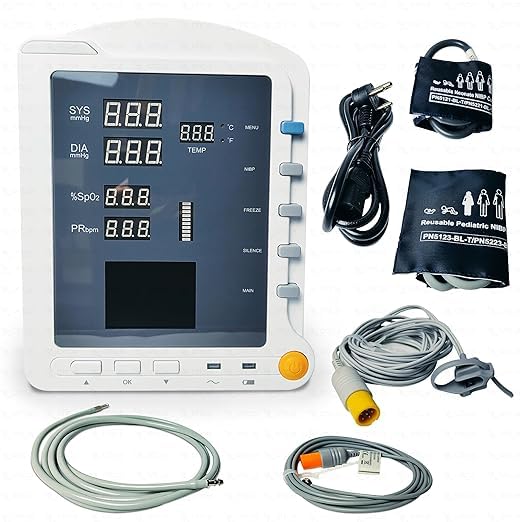
OTICA CMS 5100 Patient Monitor — Multimodal Vital Signs Monitoring for Hospital & Clinic
Short summary:
The OTICA CMS 5100 Patient Monitor is a versatile vital signs monitoring system designed for use in hospitals, clinics, and care units. It measures heart rate, SpO2 (oxygen saturation), arm blood pressure, and temperature, and is supplied with pediatric accessories for broader patient coverage. Its multicolor display and integrated measurement suite support efficient observation of key physiological parameters.
Why a Multimodal Patient Monitor Matters
Accurate vital sign monitoring is foundational to clinical assessment and decision-making. In high-traffic settings such as emergency departments, wards, and outpatient units, having a single device that measures multiple parameters simplifies workflow and reduces the need for multiple standalone instruments.
The CMS 5100 consolidates:
- Cardiac monitoring (heart rate)
- Oxygen saturation (SpO2)
- Non-invasive blood pressure (NIBP)
- Body temperature
This broad capability makes it suited for routine checks, perioperative monitoring, triage, and general patient observation.
Key Features & Clinical Relevance
Heart Rate Monitoring
The device continuously monitors heart rate, which is critical for:
- Detecting arrhythmias
- Assessing response to therapy
- Tracking trends in unstable patients
Fast, reliable detection supports timely clinical decisions.
SpO2 (Oxygen Saturation)
SpO2 measurement helps clinicians:
- Assess oxygenation status
- Guide oxygen therapy adjustments
- Monitor respiratory conditions
This is particularly important in patients with respiratory compromise or postoperative patients needing saturation tracking.
Arm Blood Pressure (NIBP)
The CMS 5100 supports non-invasive blood pressure measurement on the arm using an automated cuff. This allows:
- Regular BP measurement during rounds
- Integration into routine vital sign sets
- Standardised trends over time for hypertensive patients
Accurate NIBP monitoring is central to cardiovascular and critical care workflows.
Temperature Measurement
Body temperature is a vital sign that often signals:
- Infection
- Inflammatory processes
- Metabolic changes
Integrated temperature measurement — typically oral/axillary in a compact monitor — helps clinicians track febrile responses or treatment effects.
Pediatric Accessories Included
The unit comes with pediatric accessories, ensuring it is suitable for:
- Neonates and infants
- Children in paediatric wards
- Mixed patient settings
Pediatric compatibility increases the monitor’s utility across age groups without needing separate devices.
Multicolor Display & User Interface
A clear multicolor display enhances:
- Parameter differentiation
- Trend interpretation
- Rapid visual recognition of abnormal values
This display design supports quick assessments and reduces cognitive load during busy practice hours.
Typical Clinical Use Scenarios
The OTICA CMS 5100 is relevant in:
- General wards: Periodic vital sign tracking
- Emergency triage areas: Rapid assessment of incoming patients
- Outpatient departments: Routine vitals before consultation
- Pediatric units: With age-appropriate sensors
- Pre-operative evaluation and recovery areas: Monitoring of perioperative vitals
Its versatility makes it a practical addition where multiple standalone monitors would otherwise be needed.
How It Works — Practical Steps
-
Apply Sensors:
- Attach the SpO2 probe to the finger or toe
- Position cuff for arm blood pressure measurement
- Use temperature probe per facility protocol
-
Power On & Select Mode:
- Activate the unit and choose measurement parameters
-
Acquire Readings:
- Wait for stable waveforms and readings to register
-
Review Trends:
- Note changes over time for each vital sign
This streamlined workflow fits seamlessly into routine patient assessments.
Operational Considerations
Sensor Placement & Preparation
Correct sensor placement and skin contact improve accuracy, especially for SpO2 and temperature measurements. Cuff size should match arm circumference for valid BP readings.
Artifact Reduction
Movement, poor perfusion, and ambient light can impact readings — especially SpO2. Minimising motion and ensuring stable sensor contact enhances data fidelity.
Buying Checklist (Before Recommending)
Before procurement, confirm:
- Included accessories (adult and pediatric sensor sets)
- Display clarity and ease of navigation
- Measurement protocols supported (continuous vs spot monitoring)
- Service and warranty support in your region
- Compatibility with facility workflows (EMR, recording, trending)
Matching these factors ensures practical alignment with your clinical needs.
Where to Buy
View OTICA CMS 5100 Patient Monitor on Amazon
Final Clinical Perspective
The OTICA CMS 5100 Patient Monitor brings together core vital signs — heart rate, SpO2, arm blood pressure, and temperature — into a single, compact unit that supports both routine assessments and ongoing monitoring.
With pediatric compatibility and an intuitive multicolor display, it fits well into diverse clinical areas from general wards to outpatient check-in points. Used appropriately, it helps clinicians monitor trends efficiently and respond to physiological changes promptly.
Affiliate Disclosure:
As an Amazon Associate, we earn from qualifying purchases. This supports our work in providing medical-technology comparisons. Product images used in this article are sourced from Amazon product listings for illustrative purposes.
Medical Disclaimer:
This content is intended for educational and informational purposes only and does not substitute professional medical judgement. Always follow clinical protocols and manufacturer instructions when using patient monitoring equipment.